Peacock Line Art: Graphics & T-Shirt Designs
First Impressions: Elegant, Versatile, and Niche-Ready
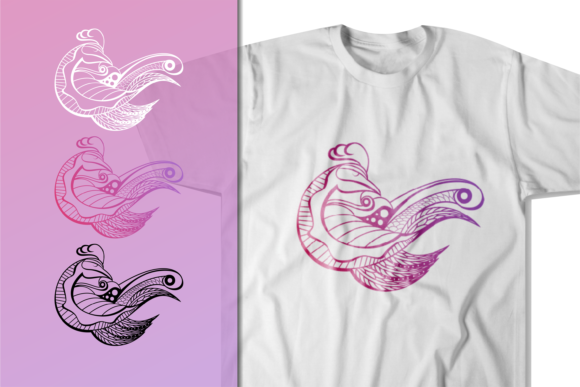
When I opened Peacock Line Art, my first thought was: “This isn’t just decorative—it’s commercially intentional.” The clean vector lines, balanced negative space, and subtle curvature of the tail feathers suggest a refined hand-drawn aesthetic—not overly ornate, not too minimal. It leans elegant and slightly feminine without being saccharine, making it ideal for boutique-style t-shirt designs, greeting cards, and nursery prints. It feels like a premium graphic design asset you’d expect in a curated Canva template pack or a high-converting Etsy digital download shop.
Real-World Use Cases Across Product Types
I tested Peacock Line Art across several commercial formats before finalizing listings—and it held up well. As an SVG design, it scaled cleanly for Cricut projects: cutting cleanly on vinyl for tote bags and tumblers, with no jagged edges or stray anchor points. As a PNG design (after proper export), it worked beautifully as a sticker design with crisp transparency—ideal for planner stickers or printable wall art bundles. For sublimation design use, I layered it over soft pastel gradients in Photoshop and got strong results on mugs and phone cases.
It also translated smoothly into Canva templates: I dropped it into invitation layouts, social media graphics, and blog headers—always pairing it with a light serif font for contrast and visual hierarchy. As a t-shirt design, it looked especially strong on heather grey or oatmeal tees, where the line weight held presence without overwhelming the fabric. In digital paper packs and scrapbooking kits, it added just enough decorative flair without competing with photos or journaling space.
Where Peacock Line Art Strengthens Your Product Presentation
This asset shines in contexts where visual storytelling and perceived value matter most. On Etsy product mockups, it stood out in thumbnail previews—clean lines read well even at small sizes. When bundled with coordinating floral motifs or minimalist borders, it elevated entire design bundles and supported seasonal collections (think spring launches or bridal shower kits). For small business branding, it lent cohesion to packaging design and brand identity kits—especially when paired with muted palettes and understated typography.
As a printable design, it performed reliably across print-on-demand platforms: consistent color fidelity on posters, clear detail retention on 8x10 prints, and good contrast against both white and ivory cardstock. Customers responded positively to its versatility—many mentioned using it for wedding stationery, baby announcements, and yoga studio merch.
Where to Use It Carefully
That said, Peacock Line Art isn’t universally plug-and-play. Its delicate tail details don’t hold up well in tiny sticker formats under 0.75 inches—fine lines blurred during print. On dark backgrounds, contrast dipped unless I manually adjusted stroke weight or added a subtle drop shadow. In text-heavy templates—like newsletter headers or multi-layered Canva social posts—it risked visual clutter if not given ample breathing room.
For Cricut or Silhouette users, I recommend verifying cut quality on actual material before listing: some versions of the SVG included grouped layers that needed ungrouping and path simplification for smooth machine cutting. Also avoid cramming it into crowded thumbnails—its elegance gets lost next to busy patterns or bold fonts.
Practical Seller Notes Before You List
- Test on real mockups: Drop it into at least three different product mockups (t-shirt, mug, and printable poster) to assess scale and proportion.
- Preview as a marketplace thumbnail: Resize to 400px wide—does the core shape remain legible?
- Check background contrast: View on white, black, and off-white backgrounds to confirm readability and licensing compliance.
- Verify PNG transparency: Open in preview mode—no stray pixels or anti-aliasing halos around edges.
- Inspect SVG cut paths: Use Inkscape or Illustrator’s outline view to spot overlapping nodes or unclosed shapes.
- Confirm file resolution and organization: Ensure EPS, PDF, and SVG files are clearly labeled and match the description—no missing variants or placeholder text.
- Pair thoughtfully with fonts: Try it with serif (e.g., Playfair Display), sans serif (e.g., Montserrat), script (e.g., Pacifico), handwritten (e.g., Qwigley), and display fonts (e.g., Bungee) to see which best supports your target audience.
- Review commercial license terms: Even though it’s marketed for business use, double-check whether resale of finished physical products is explicitly permitted—some sellers overlook this until a platform flags a listing.
Final Verdict for Digital Product Creators
Peacock Line Art is a quietly effective graphic design asset—not flashy, but dependable. It fits seamlessly into digital download shops, print-on-demand catalogs, and creative marketplace listings where buyers seek polished, ready-to-use design assets. It’s especially valuable for sellers building cohesive collections: think “Spring Botanical Bundle” or “Elegant Wedding Suite,” where consistency matters more than novelty.
If you’re launching a new Etsy product, updating your Creative Fabrica store, or prepping seasonal Canva templates, treat Peacock Line Art as a foundational element—not a standalone hero. Layer it, simplify it, recolor it, or pair it with complementary illustrations. Just remember: its strength lies in adaptability, not dominance. Used intentionally, it supports stronger product mockups, higher click-through rates, and more confident customer trust—especially among buyers who value handmade business aesthetics without sacrificing commercial polish.